Montessori-Aligned Dinosaur Curriculum: A Director's Guide
How a dinosaur curriculum unit fits Montessori principles — sensorial materials, classification work, geography of prehistoric time, and observation-based learning.
 The Chief Ranger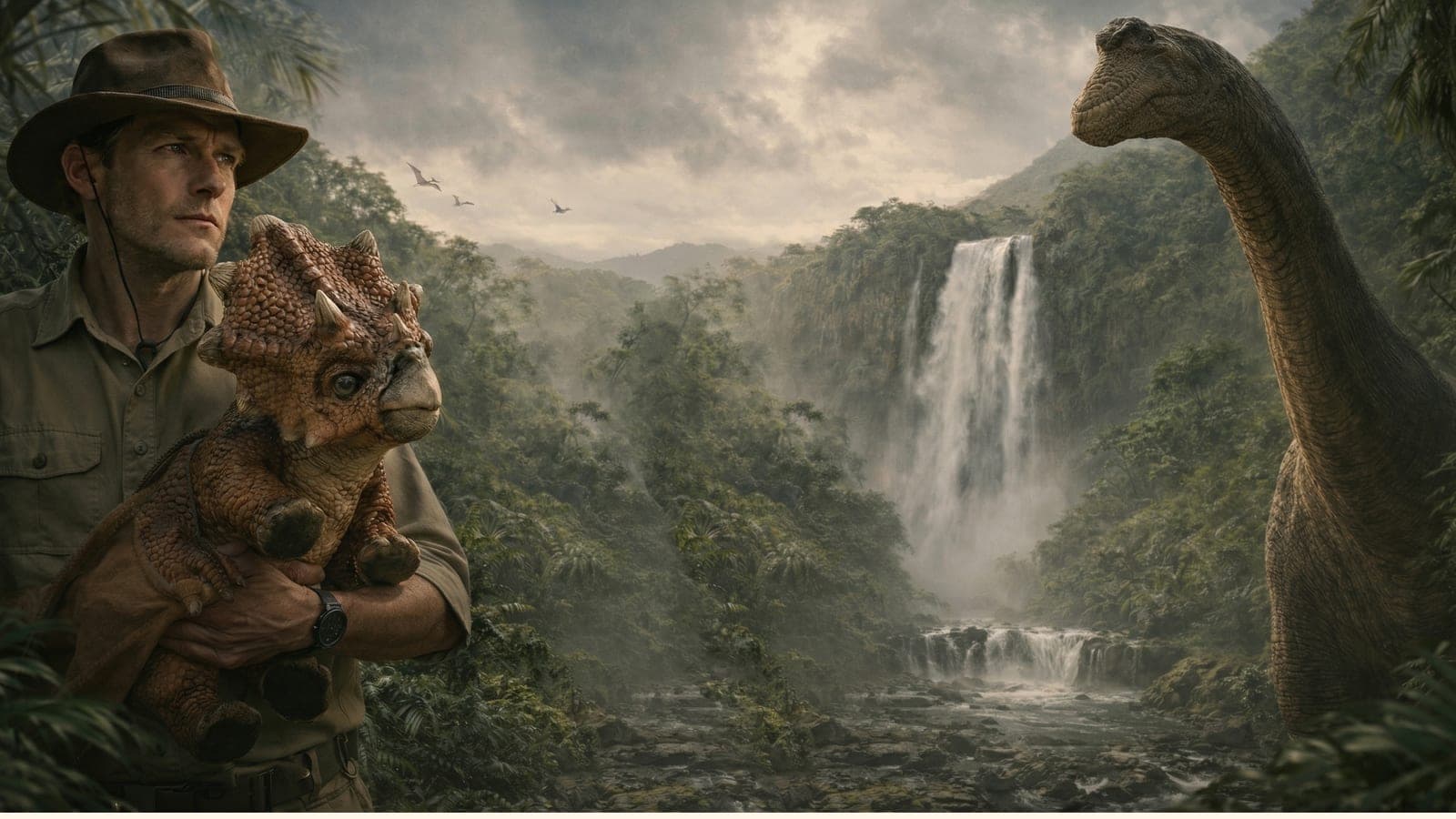
Montessori education emphasizes self-directed learning, hands-on materials, classification and sequencing, and respect for the child's natural curiosity. Dinosaurs are uncommonly well-suited to this approach — they engage almost every preschool and elementary child intrinsically, they offer rich opportunities for classification and sorting work, and they introduce the concept of deep time that anchors the Montessori "Great Lessons." This guide covers how to structure a dinosaur curriculum unit within Montessori principles for South Florida schools.
Why dinosaurs fit Montessori principles#
Five connections.
Intrinsic interest#
Maria Montessori observed that children learn best when topics engage their natural curiosity. For 3- to 7-year-olds, dinosaurs are one of the few topics that does this universally. Teachers do not need to manufacture interest; they only need to channel it.
Sensorial learning#
The Montessori sensorial work emphasizes hands-on engagement with materials that develop observational skills. Touchable fossil replicas, scale models, and life-sized animatronic dinosaur puppets all serve this principle directly.
Classification work#
Montessori classrooms use sorting activities extensively — by size, color, shape, function. Dinosaur figurines or printed cards make excellent classification materials: herbivore/carnivore, two-legged/four-legged, period (Triassic/Jurassic/Cretaceous), defensive features (horns/spikes/armor).
Geography of time#
Montessori introduces "deep time" through the "Long Black Strip" — a strip of paper representing Earth's history with humans appearing as a tiny mark at the end. Dinosaurs anchor this concept tangibly. Children begin to understand that the world has had different inhabitants across long stretches of time.
Independent learning#
The Montessori child works at their own pace, choosing activities that interest them. A well-stocked dinosaur unit gives children many options — fossil dig, identification work, scale comparison, drawing, vocabulary work — that they can choose from independently.
A 4-week Montessori dinosaur unit structure#
Suggested progression, with the understanding that Montessori classrooms work flexibly based on children's interests.
Week 1 — Introduction and Geography of Time#
Goals: Place dinosaurs in deep time. Distinguish from modern animals.
Activities:
- "Long Black Strip" lesson placing dinosaurs in geological time
- Picture cards showing modern animals vs. dinosaurs — sort by living/extinct
- Read-alouds introducing the topic
- Vocabulary cards: fossil, paleontologist, extinct, herbivore, carnivore
Week 2 — Classification and Sorting#
Goals: Develop classification skills using dinosaurs as the material.
Activities:
- Dinosaur figurine sorting by diet (herbivore/carnivore/omnivore)
- Sorting by size — small/medium/large with measuring tape
- Sorting by body features (horns/spikes/armor/none)
- Time period cards — Triassic, Jurassic, Cretaceous
- Children's individual research on a "favorite dinosaur" with picture and one fact
Week 3 — Fossils and How We Know#
Goals: Introduce the scientific method through paleontology.
Activities:
- Fossil exploration — touchable replicas (or detailed photos)
- Sand-tray fossil dig with brushes and small tools
- "How did the dinosaur die?" inquiry — children propose explanations
- Comparison of bone vs. modern animal bone
Week 4 — Project and Capstone#
Goals: Synthesize and demonstrate learning.
Activities:
- Children pick one dinosaur and create a presentation (drawing, model, written facts depending on age)
- Group "museum" set up in the classroom for children to share their work
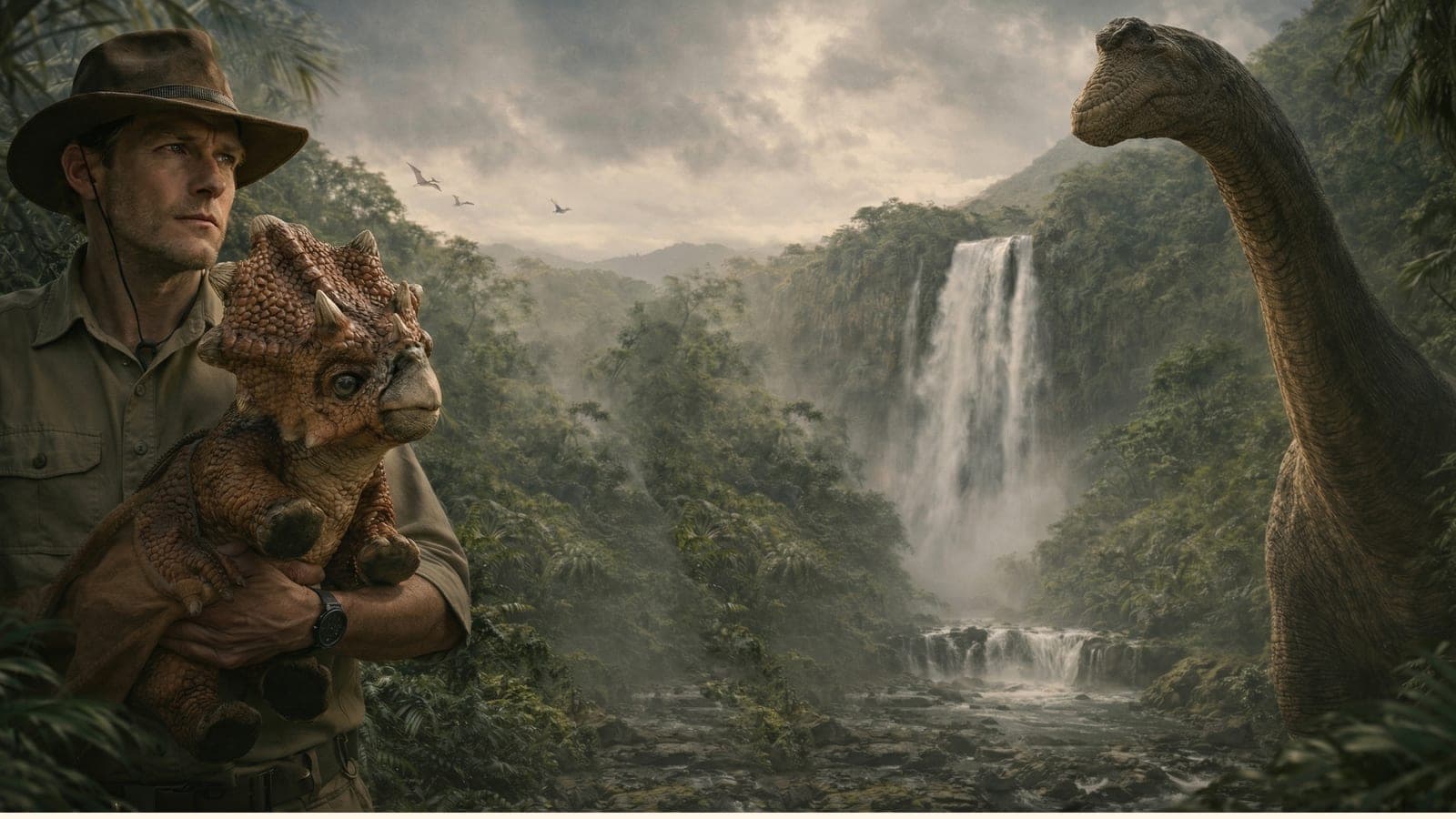
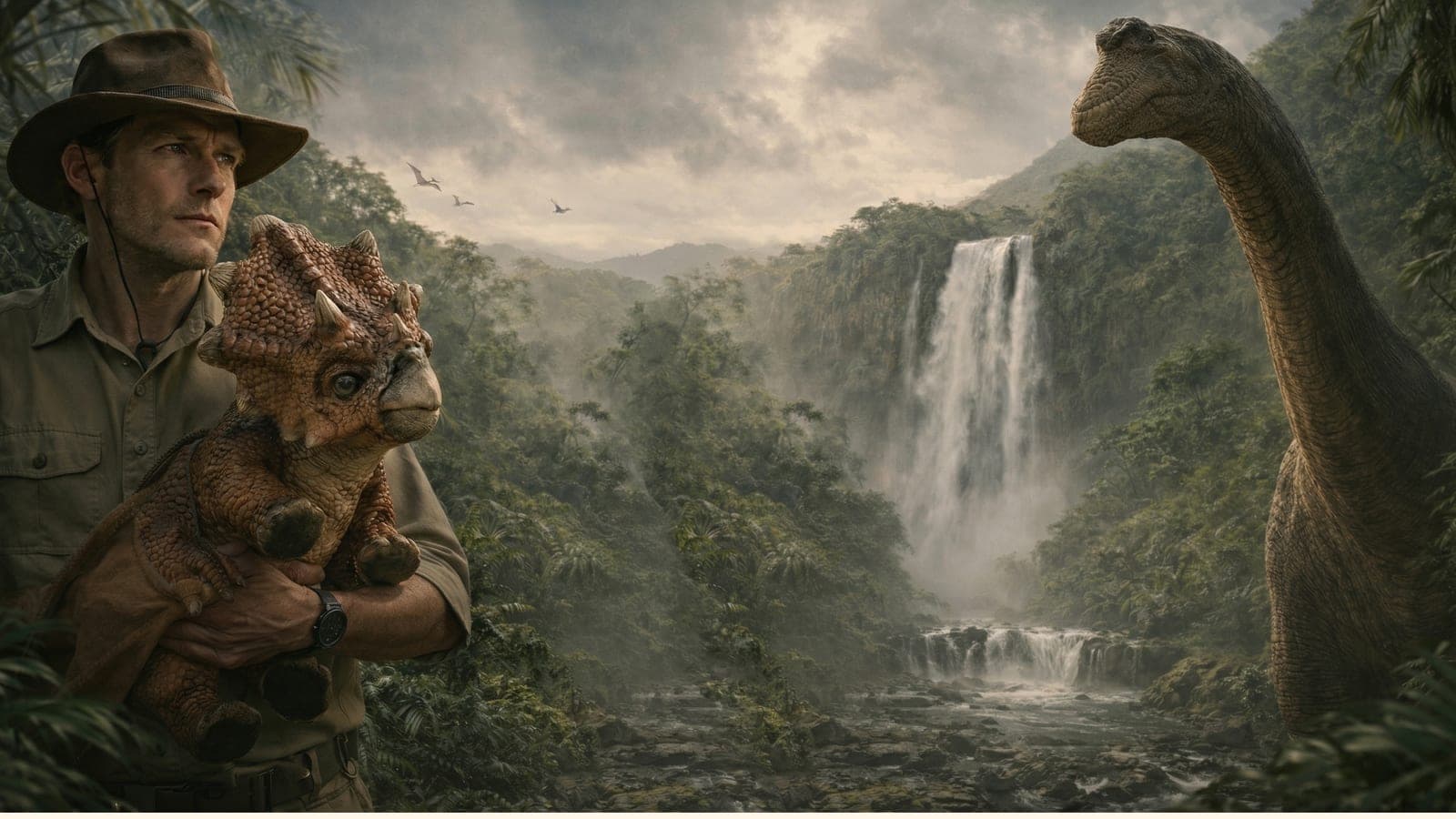
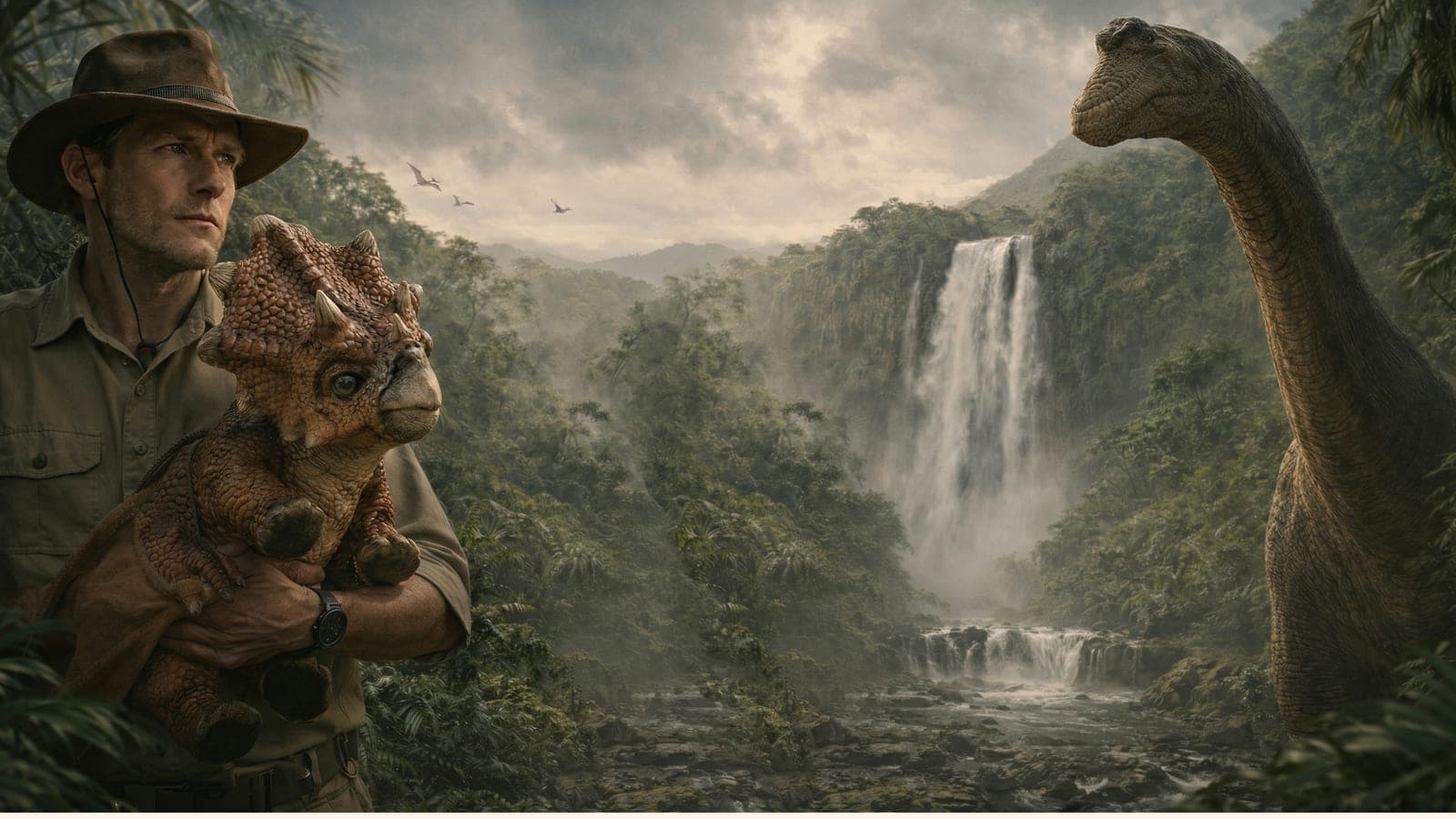
- Optional capstone event: a Jurassic Petting Zoo school event on campus, where children meet life-sized baby dinosaur puppets and apply their classification skills
Materials to have in the Montessori dinosaur unit#
A well-stocked unit includes:
Three-part cards#
Picture / picture+name / name. Print or laminate sets for each major dinosaur species (T-Rex, Triceratops, Stegosaurus, Velociraptor, Brachiosaurus, Pterodactyl, Spinosaurus, Diplodocus).
Figurines#
Plastic dinosaur figurines for classification work. A starter set of 15-20 species covers the main categories.
Touchable fossils#
Replica fossils — teeth, claws, bone fragments. $5-20 each from educational supply companies.
Scale comparison materials#
Strips of butcher paper marked with dinosaur sizes. The "how many of me equals a Brachiosaurus" activity.
Time strip#
A "Long Black Strip" showing geological time with dinosaurs placed at the appropriate period.
Books#
Age-appropriate dinosaur books for the classroom library. Mix of factual (real photographs) and narrative (story-based) options.
Project supplies#
Drawing paper, model clay, scissors, glue for individual projects.
How the Jurassic Petting Zoo event aligns with Montessori#
The format directly connects to Montessori principles:
- Self-directed engagement — children rotate through the activity stations at their own pace, choosing where to spend more time
- Sensorial materials — touchable fossils, AI Photo Station, Fossil Dig with brushes (Jurassic Discovery Zone add-on)
- Classification work — Discovery Floor Mat is an active classification activity (Jurassic Discovery Zone add-on)
- Real-world scientists — Rangers model paleontology as a profession children can grow into
- Respect for the child — Rangers calibrate to the child's pace, never force interaction
The format works at the Toddler (2.5-3 years), Primary (3-6 years), and Lower Elementary (6-9 years) levels, with Rangers adjusting pacing and content depth to the room.
Pricing and logistics#
For Montessori schools booking a Jurassic Petting Zoo event:
- Basic — $20 per student, 60 minutes
- Premium — $25 per student, 60 minutes
For sensory-sensitive Toddler rooms, Basic is the recommended package. For Lower Elementary (6-9 years), Premium adds the AI Triceratops and T-Rex finale moments that engage older children's increasing curiosity.
Full pricing and format details in our school event guide.
Frequently asked questions#
How do dinosaurs fit Montessori's "Cosmic Education" approach?#
Cosmic Education emphasizes the interconnectedness of all things. Dinosaurs are a natural entry point — they connect biology (life science), geology (geological time), geography (where they lived as continents moved), and the idea that life on Earth has changed over time. The unit can serve as a foundation for later Cosmic Education work.
Does the curriculum work for the Toddler level (ages 2.5-3)?#
Yes, with adjusted depth. Toddlers focus on visual recognition, simple sorting (big vs. small), and sensorial engagement. The "Long Black Strip" and complex classification work better at Primary and beyond.
Can the Jurassic Petting Zoo event work for a small Montessori school?#
The standard minimum is 50 students per show. Smaller schools (under 50) can pair with another nearby Montessori school for a shared event, or contact us to discuss smaller-format options.
What about religious or faith-based Montessori schools?#
We can adjust content emphasis. The science practice content (observation, classification, hands-on inquiry) is universally applicable. Time-depth language can be softened on request.
Do you provide a curriculum framework document?#
Yes. On request, we can provide a one-page Montessori-aligned framework showing how the dinosaur event connects to specific Montessori curriculum areas (sensorial, language, classification, geography of time).
Bring the unit to life#
For South Florida Montessori schools planning a dinosaur curriculum unit, the format is one of the cleanest fits for Montessori principles. See the school event guide or check date availability.
Bring a Jurassic Petting Zoo event to your school
STEM-aligned, $20 to $25 per student, comes to your campus. Lock in your school event below.