How Dinosaurs Teach Science: A Complete Guide for Parents and Teachers
Dinosaurs are one of the most effective entry points to science for kids. The biology, geology, and scientific reasoning kids learn — with sources and how to use it at home or in class.
 The Chief Ranger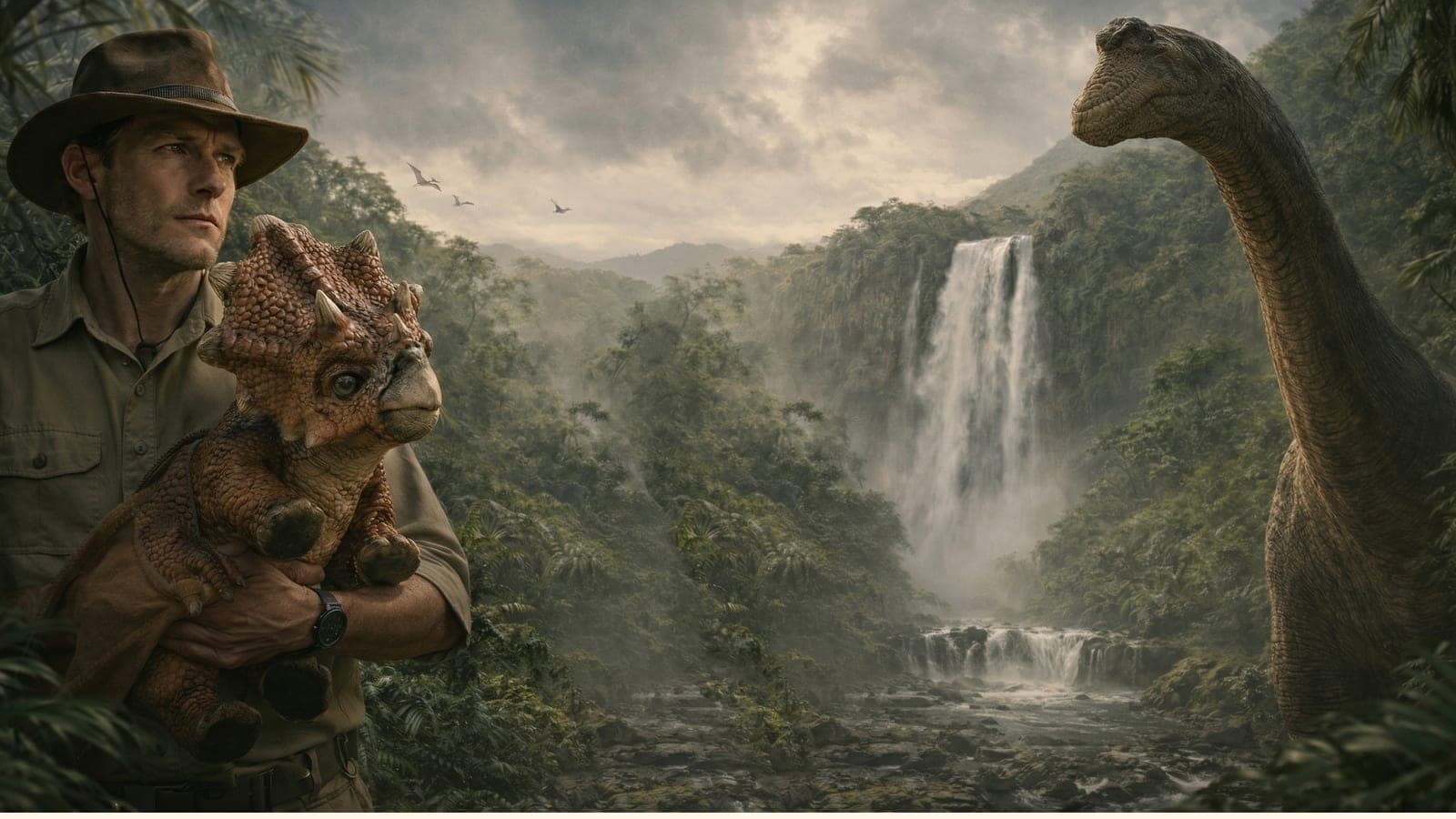
Dinosaurs are one of the most effective entry points to science for kids, and it has nothing to do with the giant teeth. The real reason a dinosaur unit teaches science better than most other topics is that everything kids do while studying dinosaurs — looking, comparing, asking, sorting, explaining — is the actual practice of being a scientist. The content sticks because kids care, and the practices are exactly what early science standards ask teachers to develop.
This guide walks through what kids actually learn from dinosaurs, why it works, and how to use it intentionally at home or in the classroom. It draws on source materials from the Smithsonian, the American Museum of Natural History, the Florida Museum of Natural History, the Paleontological Society, and National Geographic Kids.
The science kids learn from dinosaurs (and don't realize they're learning)#
A dinosaur unit done well covers more science domains than almost any other topic accessible at the K-5 level.
- Life science — adaptation, classification, ecosystems, food webs, body structures and survival
- Earth and space science — geological time, fossil evidence, environmental change, extinction
- Scientific method — observation, inference, hypothesis, evidence-based reasoning
- Engineering and technology — how scientists use tools to study things they cannot see directly
- Critical thinking — pattern recognition, classification, drawing conclusions from incomplete evidence
What makes dinosaurs unusual is that the kids volunteer their engagement. Most early science topics require the teacher to generate interest. Dinosaurs come with the interest pre-loaded. The teacher's job becomes connecting that natural curiosity to actual scientific reasoning — not manufacturing curiosity in the first place.
Life science: what dinosaurs teach about adaptation#
The single highest-leverage life science concept at the K-5 level is the idea that body parts have functions, and those functions help an organism survive in its environment. Dinosaurs make this idea visible.
A Triceratops has horns and a bony frill around its neck. Why? Show a kid the skeleton and ask. By age 5, most kids can propose: "to fight other dinosaurs" or "to protect its neck." That is the practice of inference — observing a structure and proposing its function. The Smithsonian's Department of Paleobiology provides one of the most accessible structure-to-function frameworks for kids studying dinosaurs.
A T-Rex has small front arms and massive jaws. What does that tell us about what it ate? Kids work it out: meat. Carnivore. The teeth — serrated and pointed, like steak knives — back up the inference.
A Brachiosaurus has a long neck. What might that be for? Reaching food other dinosaurs cannot reach. Tall trees. High leaves.
This is the same reasoning chain adult scientists use. Kids do it naturally with dinosaur examples because the body features are exaggerated and easy to read. Once the chain is internalized — body part → function → survival advantage — it transfers to other animals, including the ones at the zoo, the ones at home, and the ones in their own backyard.
Earth science: what fossils teach about geological time#
Geological time is one of the harder abstractions in K-5 science. The Earth is 4.5 billion years old. Dinosaurs lived between roughly 250 and 65 million years ago. Humans have existed for about 300,000 years. The numbers themselves do not mean anything to a kindergartner.
Fossils make the abstraction concrete. A kid holding a real fossil replica — a Triceratops horn cast, a Velociraptor claw replica — is touching something whose original lived before any human walked the Earth. The American Museum of Natural History's Hall of Saurischian Dinosaurs was built around exactly this principle: the physical fossils make time real in a way numbers never will.
For Florida-specific learning, the Florida Museum of Natural History houses fossils of organisms that lived in Florida over geological time — megalodon teeth, mastodon bones, and Cenozoic finds. While not technically "dinosaurs" (Florida sits on Cenozoic limestone, post-dating the dinosaur era), the same reasoning applies and the local connection makes the unit feel rooted for South Florida kids.
The big idea kids leave with: the world has been here a long time, things lived here before us, and we know that because we can find what they left behind.
Scientific method: how paleontologists actually work#
Most K-5 explanations of "the scientific method" are sterile: hypothesis, experiment, conclusion. Kids tune out within minutes. Dinosaurs make scientific reasoning into a detective story.
Paleontologists do not have time machines. They cannot watch a dinosaur eat. Everything they know, they inferred from physical evidence. The Paleontological Society's educational resources describe this reasoning explicitly for K-12 educators: fossils → observation → inference → testable claim.
What does this look like in a classroom?
A kid finds a fossil. The teacher asks: "What do you think this was? How could you find out? What else would you need to know?" The kid proposes. The teacher does not validate or invalidate — the teacher pushes back: "Could there be another explanation? What would help you choose between them?"
That conversation is the practice of science. It is the same conversation that happens between paleontologists arguing about a new fossil at a museum lab. The kid does not know that yet, but the practice is the same.
Critical thinking: why classification is a transferable skill#
Classification — sorting things into groups — is one of the most transferable cognitive skills in early childhood. Kids classify constantly: which animals are pets, which foods they like, which kids are friends. Making the practice explicit during a dinosaur unit gives kids a name and a structure for what they were already doing.
A standard classroom activity: a tray of dinosaur figurines or printed cards, ask pairs to sort. Do not give criteria. Watch what they choose. Kids will sort by:
- Size (big vs small)
- Diet (carnivore vs herbivore — once they have learned the terms)
- Body features (spikes vs no spikes, two legs vs four)
- "Scary vs cute" (toddler-level categories that lead to richer conversations)
- Era (once they have learned Jurassic vs Cretaceous)
Each sorting attempt is a model of the world. National Geographic Kids' dinosaur classification resources provide age-appropriate language for older kids who want to formalize their categories.
The skill kids build: "Things in my world can be sorted by different criteria. The criteria I choose changes what I see." That is the foundation of every scientific discipline that involves taxonomy, statistics, or data analysis. It transfers to chemistry, biology, ecology, social science, and computer science. Dinosaur classification is one of the cleanest entry points for kids 3 and up.
Why dinosaurs work better than other science topics for young kids#
Five reasons specific to early childhood.
Pre-loaded interest#
Few topics generate kid-driven engagement the way dinosaurs do. Teachers do not need to manufacture curiosity. The kids show up curious, ask their own questions, and stay focused longer than they would for an equivalent unit on, say, the rock cycle or basic chemistry.
Concrete, visible body parts#
Adaptation is hard to teach abstractly. Dinosaur body features (horns, plates, teeth, claws, neck length) are exaggerated and easy to read. Once kids understand how body features relate to survival in dinosaurs, the concept transfers to less-exaggerated examples (modern animals).
Tangible artifacts#
Fossils, fossil replicas, and even good photographs of fossils give kids physical anchors that abstract science topics do not have. A kid who has held a fossil understands "evidence from the past" in a way kids learning about it from a textbook never will.
Cross-grade engagement#
Kindergartners get the wow factor of meeting dinosaurs. Fifth graders engage with the geological timeline and the paleontology methodology. The same content scales across the K-5 range without changes. Few science topics do this naturally.
Multidisciplinary#
A dinosaur unit covers life science, earth science, scientific method, and critical thinking simultaneously. For teachers under pressure to cover multiple standards efficiently, dinosaurs are one of the few topics that hit several at once.
How to integrate dinosaur science at home and in the classroom#
A practical short guide.
For parents at home#
- Buy or borrow a touchable fossil replica (real ones are sold by educational retailers for $5 to $30 each). Let your child hold it. Ask: "What do you think this was? How could you find out?"
- Build a simple fossil dig in a sand bin in the backyard. Bury 10 to 15 dollar-store dinosaur figurines. Provide brushes. Excavate.
- Read 2 to 3 books a week during a dinosaur phase. Mix factual ("Dinosaur Bones" by Bob Barner) and narrative (the Magic School Bus dinosaur episode).
- Visit the dinosaur exhibits at the Frost Science Museum in Miami or the Florida Museum of Natural History in Gainesville.
- Talk about what scientists do. When you watch a documentary or read a book together, ask: "How did they figure that out? What evidence did they have?"
For teachers in the classroom#
- Run a 2-week dinosaur unit with explicit standards alignment. Our dinosaur curriculum for preschool and kindergarten is a 10-day plan you can drop in.
- Schedule a capstone event to anchor the unit. A Jurassic Petting Zoo in-school field trip brings life-sized animatronic baby dinosaur puppets, a fossil dig at scale, and a Ranger-led show to your campus.
- Make standards visible. Tape printed standards next to activities ("Today we are doing K-LS1-1: observing patterns of what animals need to survive"). Parents and administrators notice.
- Build vocabulary across the unit. 10 to 12 words is enough. Repeat them daily.
- Connect to family take-home material. Send 1 vocabulary card and 1 talk-about-it question home each Friday so families reinforce the unit.
Authoritative resources for dinosaur learning#
Curated list of primary sources useful for parents and teachers building a dinosaur unit. These are the same sources our curriculum content is built on.
- Smithsonian National Museum of Natural History — Department of Paleobiology — the gold standard for fossil collections and educational depth
- American Museum of Natural History — Dinosaur and Fossil Halls — exhibit-driven content with strong K-12 educational materials
- Harvard Museum of Natural History — fossil collections and educational programming
- Florida Museum of Natural History — Florida-specific paleontology, important for South Florida educators
- Paleontological Society — the professional society for paleontologists; K-12 educational resources written by working scientists
- National Geographic Kids — Prehistoric — age-appropriate language for elementary students
- NGSS — Next Generation Science Standards — the standards framework K-5 dinosaur units commonly align to
- Florida B.E.S.T. Standards for Science — Florida-specific K-12 science standards
For South Florida educators, the Florida Museum of Natural History is particularly valuable because its collection grounds the unit in local geology. Kids whose home state has its own paleontological story engage harder with the global story.
Frequently asked questions#
What science standards does a dinosaur unit cover?#
At the K-5 level, dinosaur units most directly cover NGSS 3-LS4-1 (fossils and ancient environments), 1-LS1-1 and 4-LS1-1 (body structures and survival), and K-LS1-1 (patterns in what animals need to survive). Florida's B.E.S.T. K-5 science standards overlap substantially. Practice standards covered include observation, asking questions, classification, constructing explanations from evidence, and communicating findings.
Is dinosaur content age-appropriate for 3- and 4-year-olds?#
Yes, with calibration. For 3- and 4-year-olds, focus on petting, sorting, and naming. Skip the extinction discussion (it lands better at 5+). The wow factor and the body-features-and-functions content work well at the youngest preschool ages.
How do I handle questions about extinction with young kids?#
Honestly and gently. The asteroid story is true and most 5-year-olds can handle it presented as "something very big happened a long time ago that changed the Earth, and the dinosaurs could not live there anymore." For 3- and 4-year-olds, "they are no longer alive" is enough — extinction as a concept lands better at 5 and up.
What if a family objects to dinosaur content on religious grounds?#
A small number of families do, usually around the geological time aspect. The most workable approach we have seen schools use is to lean on the scientific practice side — observing, sorting, asking questions, communicating findings — rather than time-depth language. Most families appreciate the transparency and accept the framing. The full discussion is in our Florida STEM standards post.
How is "scientific reasoning" different from "the scientific method"?#
"The scientific method" is the textbook version: hypothesis, experiment, conclusion. "Scientific reasoning" is what scientists actually do: observe carefully, propose explanations, test them against evidence, revise as new evidence comes in. Paleontologists are a clear example because they cannot do controlled experiments — they reason from physical evidence. Teaching kids the reasoning version transfers more broadly than the textbook version.
Can dinosaur content be tied to math?#
Yes. Measurement (how long is a Brachiosaurus compared to a school bus?), comparison (which dinosaur is bigger?), counting (how many fossils did we find?), and basic statistics (which classification is most common in our class's sorting?) all integrate naturally.
Build the science unit kids will remember#
Dinosaurs are not a gimmick. They are one of the few science topics that hits multiple K-5 standards, generates kid-driven engagement, and gives teachers a clean way to teach the practice of being a scientist. Used intentionally, a dinosaur unit can be the strongest science unit a child experiences in their first six years of school.
For South Florida schools and families looking to anchor a dinosaur unit with a real-world experience, a Jurassic Petting Zoo school event brings life-sized animatronic baby dinosaur puppets, a real fossil dig, and a Ranger-led show that puts the science you have been building in your classroom into a memorable context. Or check date availability for your campus.
Bring a Jurassic Petting Zoo event to your school
STEM-aligned, $20 to $25 per student, comes to your campus. Lock in your school event below.