How Animals Adapt to Survive: Lessons from Dinosaurs and Modern Animals
Why animal bodies are shaped the way they are. A guide to adaptation in dinosaurs and modern animals — body features, behavior, and how scientists figure out what each one is for.
 The Chief Ranger
Why does a Triceratops have three horns? Why does a giraffe have a long neck? Why do Velociraptors have curved claws and Stegosaurus have spikes on its tail? Every body feature an animal has — alive today or extinct long ago — exists because at some point it helped that animal survive and pass on its traits. Understanding adaptation is one of the most powerful ideas in biology, and dinosaurs make it visible in a way few other topics can.
This guide explains what adaptation is, how it works, and how scientists figure out what specific body features are for, using examples from dinosaurs and modern animals side by side.
What "adaptation" actually means#
An adaptation is a body feature or behavior that helps an animal survive in its environment. The classic four categories:
- Survival adaptations — for staying alive (camouflage, claws, armor)
- Feeding adaptations — for getting food (teeth shape, beak shape, hunting behavior)
- Locomotion adaptations — for moving (leg structure, wings, fins)
- Reproductive adaptations — for finding mates and raising young (colorful displays, nest-building, parental care)
Most body features serve more than one function. A Triceratops horn is defensive AND a display signal AND a tool for fighting other Triceratops. A peacock's tail is for attracting mates AND a serious cost (heavy, hard to fly with). Real adaptations are messy. They are usually compromises between competing functions.
How adaptations come about (in 60 words)#
Animals vary slightly from generation to generation. The variations that help an individual survive and reproduce get passed on more often than the variations that hurt. Over millions of generations, helpful variations accumulate and unhelpful ones disappear. The result is animals whose body features are matched to their environment. This is evolution by natural selection. Our evolution guide covers the full picture.
Reading body features in dinosaurs#
The reason dinosaurs are so useful for teaching adaptation: their body features are exaggerated and easy to read. Modern animals have subtle adaptations that take training to recognize. Dinosaurs' adaptations are usually obvious.
Triceratops horns and frill#
Three long horns, a wide bony frill. What are they for?
Hypothesis 1: Defense. Pointed at a T-Rex that wanted to attack, the horns are deadly. Fossil evidence confirms Triceratops survived T-Rex attacks at least sometimes.
Hypothesis 2: Within-species competition. Like modern bull elk or rhinos, Triceratops males may have used horns in fights for mates. Some Triceratops fossils show horn injuries consistent with this kind of fighting.
Hypothesis 3: Display. The frill in particular was probably bright-colored in life, used for identification and signaling. Likely larger and more developed in mature adults than in young ones.
Current consensus: all three. Real adaptations usually serve multiple functions.
Stegosaurus plates and tail spikes#
Plates: Probably mostly for display (signaling to other Stegosaurus, identifying species). Maybe minor defensive function (visual deterrent). Older theory of thermoregulation has weakened.
Tail spikes: Genuinely defensive. Healed bone evidence on Allosaurus fossils shows Stegosaurus spikes actually struck and wounded Allosaurus in encounters.
The plates and spikes are different adaptations — display vs defense — even though both are on the same animal. Real biology is layered.
T-Rex's massive teeth and tiny arms#
Teeth: Carnivore adaptation. 12-inch banana-sized serrated teeth designed for biting through bone and tearing flesh. Reflects an animal that ate meat directly without much processing.
Tiny arms: A puzzle that took decades to resolve. The bones show muscle attachment points, meaning the arms were used. Current theories: gripping struggling prey, helping the animal stand up after lying down, possibly courtship. They were not vestigial; they were just small relative to body size because T-Rex's hunting strategy did not require big arms.
Velociraptor's sickle claw and feathers#
Sickle claw: Used for gripping and pinning prey (the curve is wrong for slashing). Direct fossil evidence (the famous "Fighting Dinosaurs" specimen) shows the claw embedded in a Protoceratops throat.
Feathers: Not for flight (Velociraptor could not fly). Likely for insulation, display, brooding eggs, and possibly providing lift during high-speed turns. Direct fossil evidence (quill knobs in the bone) confirms vaned feathers were present.
Brachiosaurus's long neck and long front legs#
Long neck: Reaching food other herbivores could not. A 30-foot neck on a 40-foot-tall animal accessed treetops 40 feet up.
Long front legs: Tilted the body to angle the neck higher. Stegosaurus and most other sauropods had shorter front legs. Brachiosaurus's body design was specifically adapted to maximize height for feeding.
The combination of features makes Brachiosaurus a specialist for high feeding. Other sauropods filled different niches with different body designs.
How modern animals show the same patterns#
The principles dinosaurs demonstrate apply to every animal alive today. A few examples kids can observe.
Giraffe (the modern long-necked herbivore)#
Long neck for reaching tall trees, same general adaptation as Brachiosaurus. Distinctive patterned coat for camouflage in dappled tree shade. Tongue is dark to resist sunburn during long feeding sessions.
Elephant (the modern megaherbivore)#
Trunk for reaching food and water — a different solution to "how do you reach things without moving your body" than the sauropod long-neck approach. Large ears for cooling (radiating heat). Tusks for defense and digging.
Cheetah (the modern fast predator)#
Slim body, long legs, lightweight skeleton — all adaptations for running speed. Distinctive tear marks below eyes reduce glare while hunting in bright sun. Semi-retractable claws (unlike most cats) for traction at high speed.
Bald eagle (a modern predator)#
Sharp talons and beak (predator). Excellent vision (eight times more powerful than human vision). Streamlined wing shape (efficient soaring flight). Bright white head feathers (display and species identification).
Sloth (the slow specialist)#
Long claws for hanging from trees. Slow metabolism (low food demand). Algae-tinted fur (camouflage in tree canopy). Sleeps 15+ hours a day. The opposite of cheetah optimization.
How scientists figure out what an adaptation is for#
Three main approaches.
1. Body feature analysis#
Looking at the structure of a feature and reasoning about what it could and could not do. T-Rex teeth shaped like steak knives → carnivore. Triceratops grinding teeth and beak → herbivore eating tough vegetation. The structure of the feature constrains the function.
2. Comparative anatomy#
Comparing extinct animals to modern relatives. Birds (dinosaur descendants) and crocodiles (cousins) tell us about dinosaur reproduction, parental care, and respiration. Modern long-necked animals (giraffes) tell us about the constraints of long-neck feeding.
3. Fossil evidence of behavior#
When fossils preserve direct evidence of behavior — bite marks, healed injuries, trackways, nesting sites — we can confirm what features were actually used for. Stegosaurus tail spikes wounding Allosaurus is direct evidence that spikes were defensive weapons.
What kids can do with this#
Three classroom or home activities that build the skill.
Activity 1: Body feature inference#
Show kids a photo of an animal they have never seen (a tapir, a tarsier, a sloth bear). Before naming it, ask: "What do you see? What do you think this animal eats? Where do you think it lives? How would you find out?"
The exercise builds the same inference muscle paleontologists use. The kid does not know the answer in advance — they have to read the body features and propose.
Activity 2: Compare dinosaur and modern animal#
Pair a dinosaur with a modern animal:
- Triceratops and rhinoceros (both horned herbivores)
- T-Rex and lion (both apex predators)
- Brachiosaurus and giraffe (both long-necked herbivores)
- Velociraptor and roadrunner (both small fast predators)
Ask: "What's similar? What's different? Why might they have similar features even though they are not closely related?" This builds understanding of convergent evolution — different lineages developing similar adaptations to similar problems.
Activity 3: Backyard observation#
Watch the animals in your backyard or local park for 15 minutes. Ants. Birds. Squirrels. For each, list two body features and propose what they are for. The same skill that built paleontology applies in your own neighborhood.
Why this matters for science education#
Adaptation is one of the most transferable concepts in biology. Once a kid internalizes "body features have functions matched to environment," they can apply it to:
- Evolution (how adaptations come about over time)
- Ecology (how animals fit into ecosystems)
- Conservation biology (why losing habitats matters)
- Comparative anatomy (medical sciences)
- Biomimicry (engineering inspired by nature)
A child who understands why a Triceratops has horns understands the foundational logic of biology. The dinosaur is the entry point; the principle transfers everywhere.
Frequently asked questions#
Are adaptations always perfect?#
No. Real adaptations are compromises. A peacock's tail attracts mates but is heavy and hard to fly with. T-Rex's massive head was a great hunting tool but limited its ability to fit through small spaces. Real biology trades off competing pressures.
Can an animal lose an adaptation?#
Yes. Cave fish often lose eyes over generations because eyes are expensive to maintain and not useful in total darkness. The eye-genes are still present but turned off or degraded. This is sometimes called "vestigial" — a feature that no longer serves its original function.
How long does it take for an adaptation to evolve?#
Highly variable. Some adaptations (like coloration shifts) can evolve in dozens to hundreds of generations. Major body restructuring takes millions of years. The famous peppered moth color shift during the Industrial Revolution took about 50 years — fast, but only because the existing variation was already present.
Is it true that humans have "vestigial" features?#
Yes, some. The appendix is largely vestigial in modern humans (it once helped digest plant material). Wisdom teeth often don't fit because human jaws have shrunk faster than the genes for additional molars caught up. Goose bumps (raising body hair when cold or scared) are vestigial from when our ancestors had thicker fur.
Do plants adapt too?#
Yes. Cactus spines (defense from herbivores), bright flowers (attracting pollinators), tap roots (reaching deep water), and leaf shapes (capturing sunlight efficiently) are all plant adaptations. The same logic applies — features that help the plant survive and reproduce get passed on.
Can adaptation explain everything about animals?#
No. Some features are byproducts of other features, evolutionary accidents, or have functions we have not yet figured out. The biology of any individual animal is more complex than a clean "this feature is for that function" summary. But adaptation is the right framework to start with.
Bring biology to life#
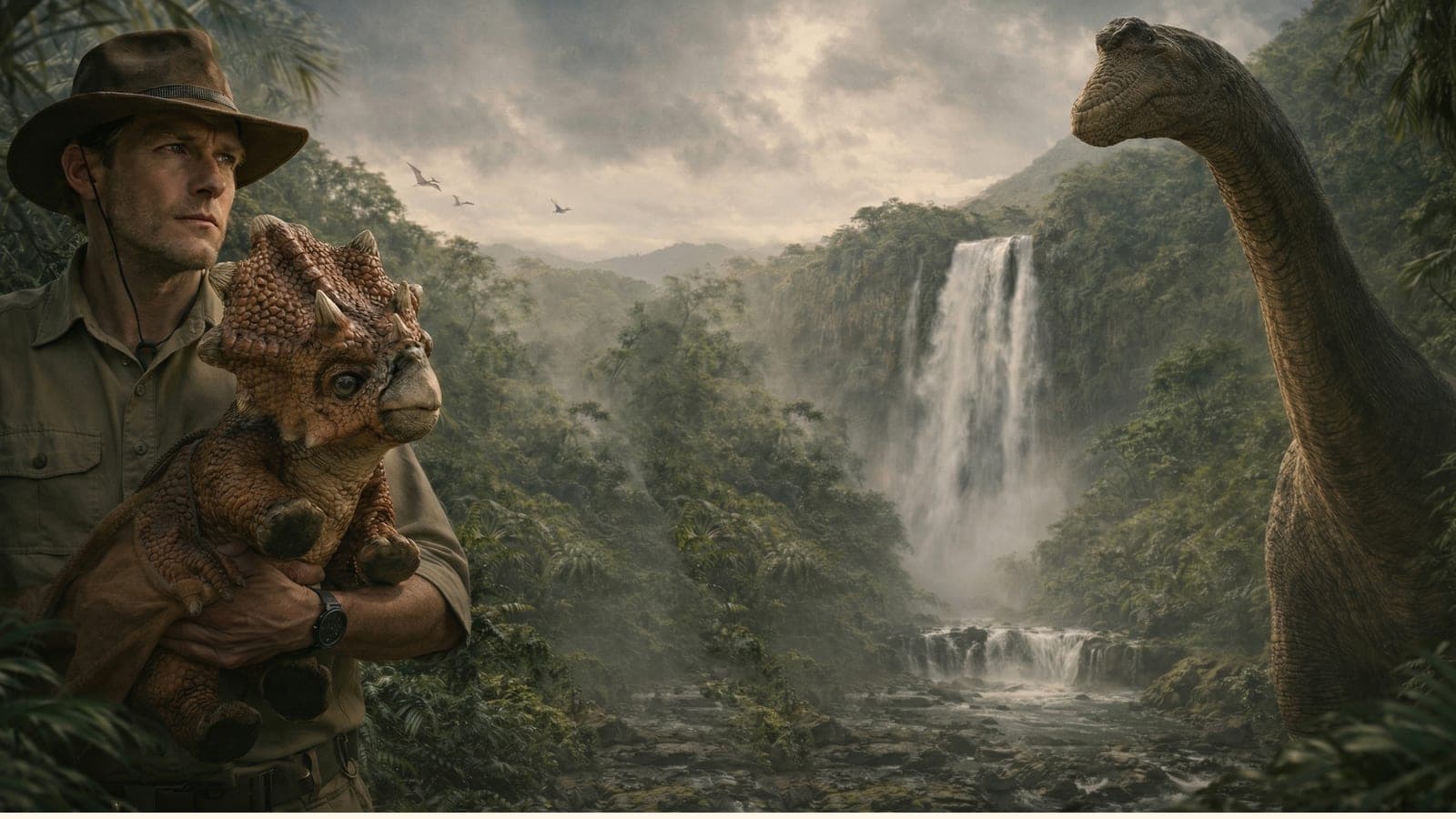
A child who has seen a baby Triceratops up close — examined the horns, felt the frill, observed the body structure — has the foundation for understanding adaptation in a way books cannot teach. Our school events and birthdays bring life-sized animatronic baby dinosaurs to your space. For South Florida families and schools, see the experience page or check date availability.
See the dinosaurs you just learned about — up close
Jurassic Petting Zoo brings life-sized animatronic baby dinosaurs to schools, daycares, and birthdays across South Florida. The same dinosaurs you just read about, in your space.